

6 November 2026 — Writing
Curators in Conversation: Morven Gregor & Mara Gladstone
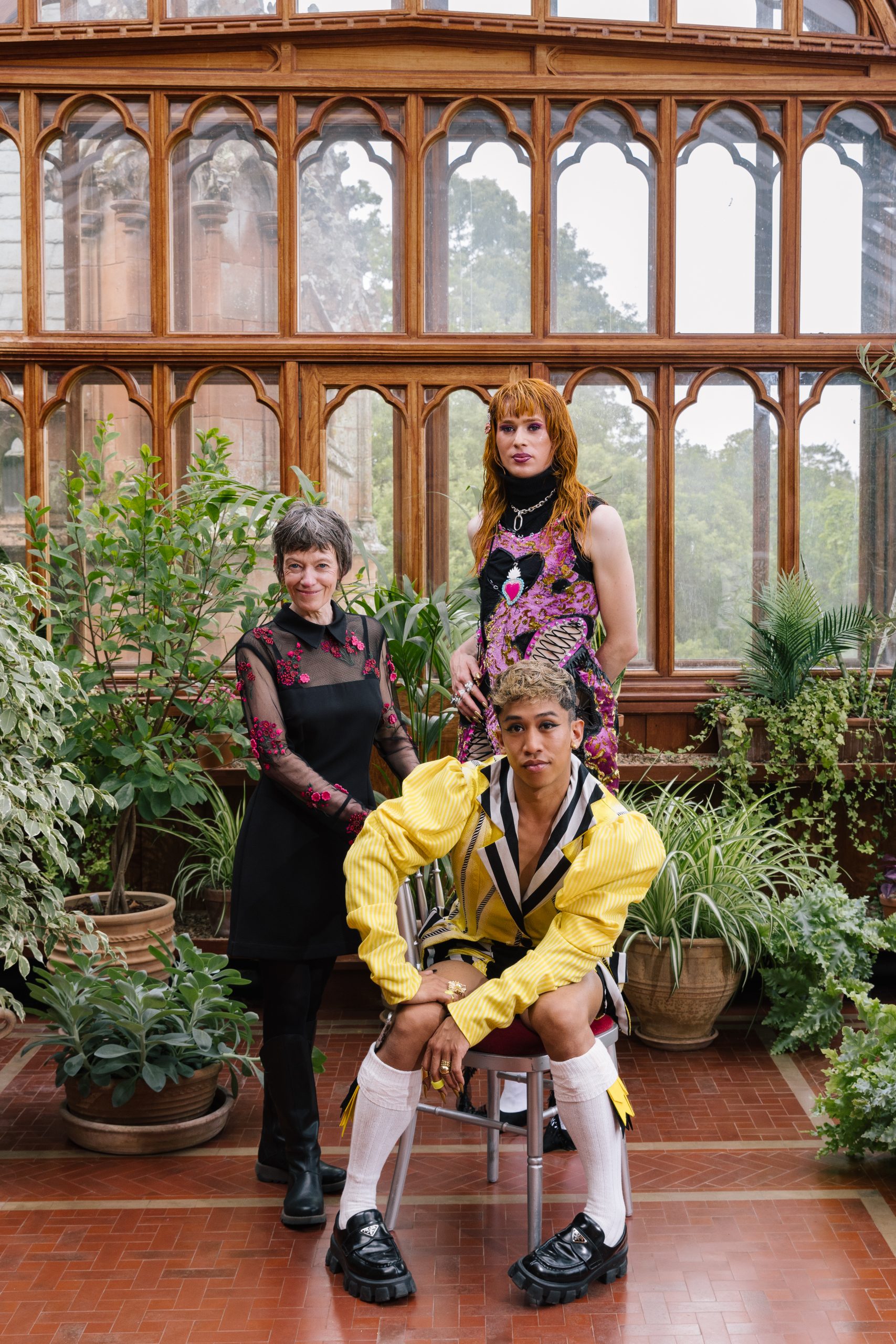
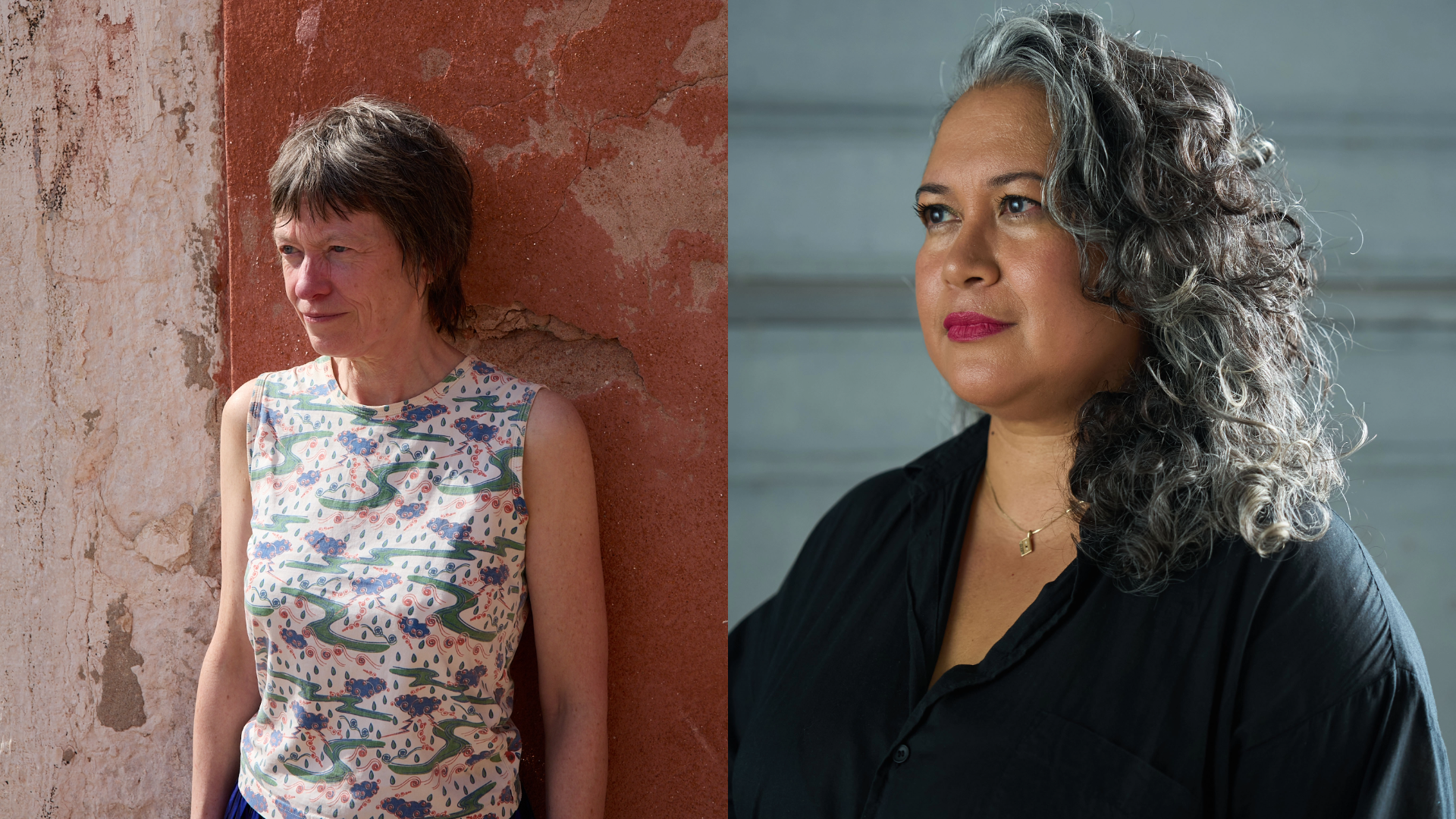
Mara Gladstone is the curator of the Philippine Pavilion at the 61st Venice Art Biennale 2026 Sea of Love / Dagat ng Pag-ibig a project by artist Jon Cuyson, and Morven Gregor is the Curator of Contemporary and Learning at Mount Stuart Trust, who this year curated Scotland + Venice’s presentation Shame Parade by Bugarin + Castle. Here, the Curators discuss their projects in Venice and some more on what’s to come after.
Listen or read the transcript below:
This transcript has been edited for readability.
Morven Gregor: Hello to everybody who might be listening. My name is Morven Gregor, and I am delighted to be in conversation with Mara Gladstone. We have both been working as curators this year at La Biennale di Venezia. Mara, would you like to introduce yourself?
Mara Gladstone: Sure, thanks. I’m so happy to be chatting with you, Morven. My name is Mara Gladstone, and I am a curator for the Philippine Pavilion at the 2026 Venice Biennale. I’m an independent curator, but I’ve worked at a variety of arts institutions in the United States with regional, national and international presences.
When I was developing this project with Jon Cuyson, a Filipino artist based in Manila, I was researching other Filipino artists participating in the Venice Biennale, and I saw that there was a project coming out of Scotland. So I reached out to you a few months ago to have a conversation. I feel that’s what the Biennale is supposed to be doing: putting us in conversation. So often we get very focused on our own projects, and it’s hard to connect personally with the people behind the other projects. So I’m very happy that we can have this conversation now, Morven.
Morven Gregor: You mentioned that your pathway hasn’t necessarily gone in one supercharged direction, and that it’s taken a few twists and turns. Would you be happy to chat a wee bit about how you came to be doing this project?
Mara Gladstone: Yes. I always wanted to work in the arts. I started my career working in education for arts organisations, then in fundraising for major museums, then in public programmes for major museums. I went on to do a PhD in an interdisciplinary art history programme and wasn’t quite sure where I’d go after that. Then I got a position at a mid-sized museum in Southern California, Palm Springs Art Museum, where my skills in working across disciplines and genres were welcomed. Because it was a small museum, we had to wear many hats, and I think all of that background eventually led me to this opportunity.
But, I’ll also say that travelling really led me here, and reconnecting with my Philippine heritage. I was born in New York City and I’m a US citizen, but my mother was born in the Philippines. Over the last ten or fifteen years I’ve become increasingly interested in reconnecting with that part of my background, so I became a Philippine citizen, and that is actually what made this opportunity possible. It’s interesting: I grew up in New York City and live in California, where you’d think there are all these incredible opportunities, but actually this has been the most exciting opportunity of my career, and it’s in representing the place where my mother was born.
Morven Gregor: Oh, that’s wonderful. I think we should go on to talk about nationality and nation states, but maybe first I should explain a wee bit about wearing many hats, as you just did?
Mara Gladstone: Yes, because I think we have a lot of connections in this way. When you think of a curator, you think of someone working in a museum in a certain way, but I was very curious to know more about your position and your institution.
Morven Gregor: I am lucky enough to work at Mount Stuart Trust on the Isle of Bute, on the west coast of Scotland. It’s an extraordinary neo-Gothic building with gardens and a historic collection. Since 2001 there has also been a contemporary visual art programme here, which was initiated and is still directed by Sophie Crichton-Stuart.
In 2016, after a career with many twists and turns of my own, and while I was in the middle of a PhD at Glasgow School of Art, a job was advertised on Bute for someone to work in the education team. There was a small line in the advert about the visual art programme, so I based my application around that, having already done a master’s in art history.
Over the last ten years the job has changed, grown and expanded, and in some ways the visual art programme has too. We recently received three-year funding from Creative Scotland, our national funding body, which has been really helpful but also we’ve expanded the programme. We commission international artists to make work in response to Mount Stuart, the island and the collections. We’ve started to work more with performance artists, and we have a programme for emerging artists with a particular focus on socially engaged practice. So it speaks to a wide range of my interests.
One of the entirely unexpected and delightful things about this year has been the opportunity for Mount Stuart Trust to be the curatorial team for Scotland + Venice, and for Scotland’s return to Venice after a few years away.
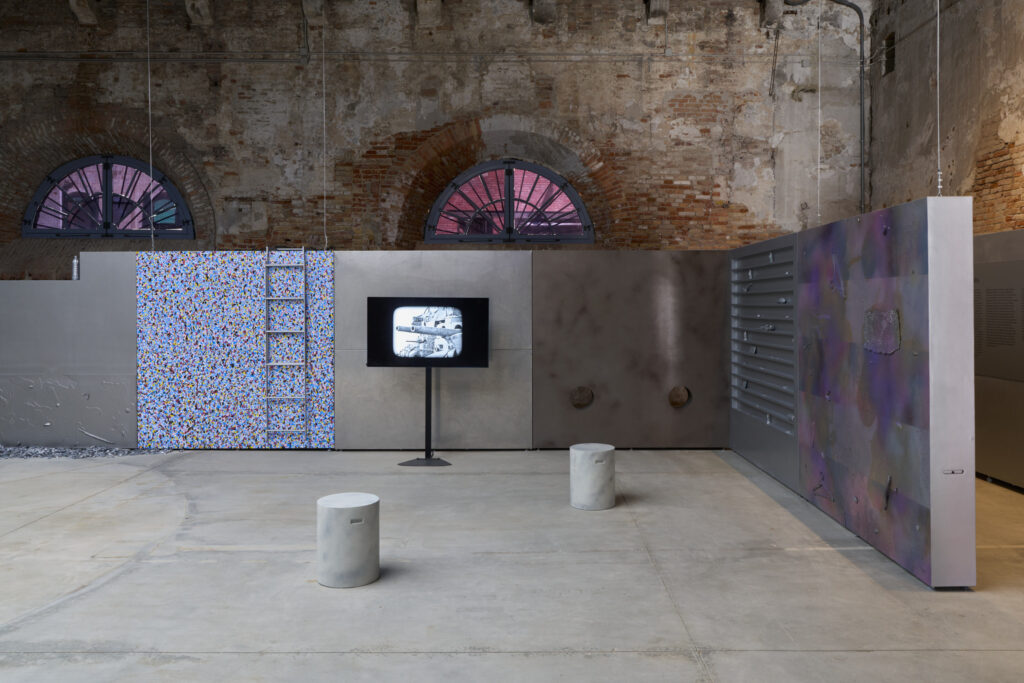
PhilippinePavilion, Sea Of Love, JonCuyson. Photo Clelia Cadamuro
Mara Gladstone: Our career pathways have a lot in common, and we both find ourselves to be curators who are involved in many different aspects of organising an exhibition. What’s also really interesting is that we’re both representing countries that are rather new to Venice, or have been reintroduced in the last ten to fifteen years. I was surprised, actually, that Scotland is only recently participating.
Morven Gregor: Oh no, Scotland has presented in the past, since the early 2000s. After 2022 it was decided to take a pause, and there was a big review carried out by the Scotland + Venice partnership, which is Creative Scotland, National Galleries of Scotland and British Council Scotland. The review asked people across the sector, including people who had been to Venice before, to think about the benefits and the drawbacks. Obviously it’s a big financial investment. It also asked people who had never been what opportunities it might give them.
As an outcome of that review, it was decided that Scotland should be back in Venice, so this year is our first return after a few years. It’s been really heartwarming chatting with people from other pavilions who have said how lovely it is to see Scotland back.
Having said that, we are a Collateral Event. The Biennale has these classifications, and with Great Britain having a pavilion in the Giardini with official national status, Scotland + Venice is a Collateral Event. But we hope it’s one that attracts lots of interest because of the excitement of the work we’re showing.
Mara Gladstone: Part of the fun of going to Venice is getting out of the Giardini and the Arsenale, exploring the city streets and discovering things that weren’t necessarily planned.
Morven Gregor: And the Philippines has a history at the Biennale too, but again with a gap?
Mara Gladstone: Yes, it’s very interesting how these things happen. The first Philippine Pavilion was in 1964, and then it didn’t happen again until 2015. We’re the sixth presentation of the visual arts pavilion since then, and there have also been architecture pavilions. So the Philippines’ participation is relatively recent.
Our project is inspired by the unsung labour of Filipino seafarers, who make up one in every three workers on ships in global waters at any given time. As Filipinos, we are always seeking each other out wherever we go. Filipinos fuel a lot of the tourist economy in Venice; they’re often in the kitchens, and they’re the housekeepers in the hotels and apartments. Talking with my Filipino-Italian colleagues, who work with the pavilion and act as liaisons with the community, we know that our diaspora brothers and sisters take a lot of pride in seeing that presence. It’s really important.
I know there are always funding difficulties in the arts and debates about what should be funded. Our project is funded by the Philippine government. It’s really important to fund emerging artists and living traditions, and I think it’s also important to support artists who may have worked for decades as educators. Jon has been a professor and educator and has maintained his practice for more than 30 years, and this is the first time he has had a major international solo exhibition at this level. That matters for developing an art workforce in the world, but it’s also really important for our diaspora communities everywhere. Being part of Venice is something we are so proud of, and it makes other people proud too. We love that relationship, especially as the content of our project is so much about it.
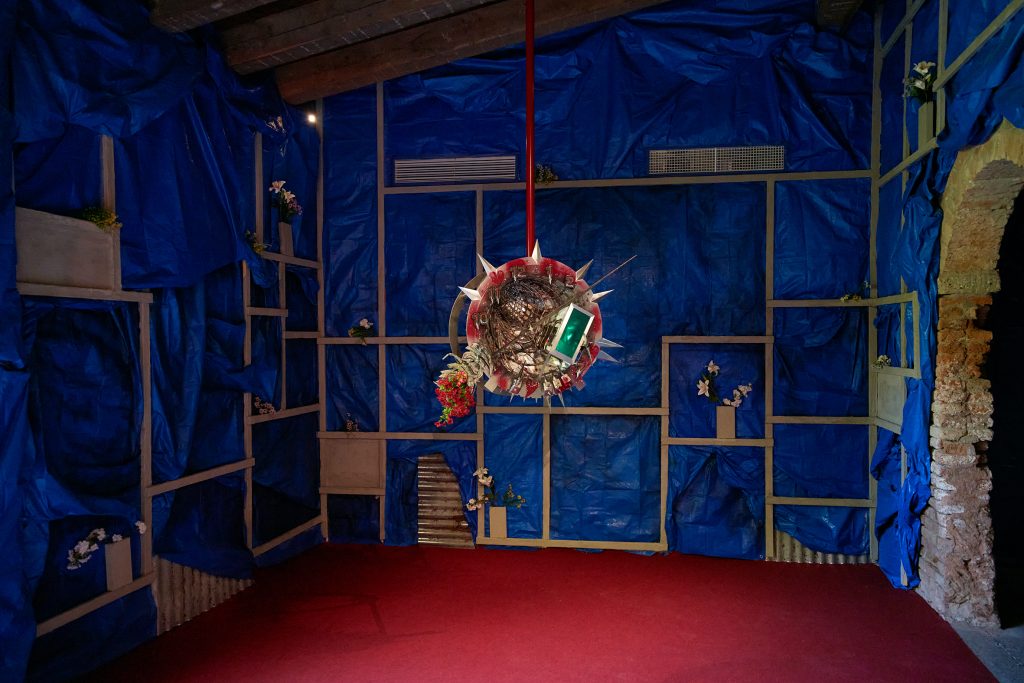
Shame Parade, Bugarin + Castle, curated by Mount Stuart Trust. Scotland + Venice 2026. Photo by Dimitri D’Ippolito.
Morven Gregor: I suppose I should say something about why our project connects with the Philippines, which I haven’t really mentioned yet. The project we are presenting is called Shame Parade, by the artist duo Bugarin + Castle: Angel Cohn-Castle and Davide Bugarin. Davide’s heritage is Filipino; he grew up between the Philippines and Italy and now lives in Glasgow, as does Angel. Representation and aspects of Philippine culture are central to our presentation, so correct me if I’m wrong, Mara.
It’s really interesting when we talk about national pavilions, how nation states present themselves and how artists are selected. From a Scottish perspective, we always talk about Scotland being a welcoming country, where anybody who lives here can consider themselves Scottish, and we’re interested in people with various backgrounds and stories to tell. Angel and Davide weave and blend so many cultural and art historical references, alongside a clear narrative about trans and queer rights that runs through the project. In any work that is so layered, it’s fascinating to see how national cultural references can overlap.
Mara Gladstone: In talking with Angel and Davide, I found the depth of their research so impressive, spectacular, fabulous, loud and intense. I really loved experiencing it, because aesthetically it’s quite different from my project with Jon for the Philippine Pavilion.
Ours is a love story, and there is also a queer narrative embedded within it. People ask me what I want visitors to leave with, and I’m just so proud that we’re able to present a project with a queer storyline as representing the Philippines. Just as your pavilion represents a sense of the nation state as welcoming to all, it’s the same thing for us: we are all part of this story. I’m the first American and Filipino curator to represent the Philippines, and I know my colleagues at the NCCA and PAVB, who sponsored this project, are really proud of that. It’s about the many people who straddle different cultures. But this is simply our way of being. We’ve always been here and always been part of the story, so it’s amazing to be acknowledged in this way.
Morven Gregor: That’s a lovely phrase, “we’ve always been here”, and I think it applies to migration but also to queer and trans histories. The nub of the exhibition is the idea of charivari a medieval European tradition of shaming people who were seen to be transgressing dominant social codes. They would be shamed by their fellow villagers or neighbours, as a way of keeping people in line; it sounds pretty horrific, to be honest. That word was then applied in the Philippine penal code. The translation of a word from a European tradition into a legal code speaks to colonial ideas, but also to the movement of language as well as the movement of people.
As part of the research, we looked at histories of queer and trans people in the Middle Ages, because we were starting from this medieval idea of the charivari parade. We looked at historic prints in the national collections here in Scotland, imagining what those parades might have looked like, and that gave us a lot of visual references for the film work Angel and Davide made. There was also a lovely exhibition in New York about queer and trans people depicted in medieval artefacts, which was an interesting avenue of research. Human history has always held diversity, let’s face it.
Mara Gladstone: I love that history is still so important. In some of the most powerful contemporary projects, that depth of knowledge may not be instantly apparent. But I love how in both of our projects the artists really dive deep into these histories, grab on to something and make it into something new.
Morven Gregor: I think it’s also about whose story gets told. Voice is an important theme running through our project: whose voices get heard and whose voices get a platform. There’s so much shouting in the political world these days, and elsewhere, that voices sometimes get lost, and Angel and Davide interrogate that in complex and interesting ways. It’s been interesting to see audiences’ responses and to find that people have celebrated this giving voice to experiences they can identify with. I think that’s a really important thing to be doing. Have you had much chance to see people from the Philippine diaspora in Italy feeling a sense of pride and of being seen?
Mara Gladstone: Yes. When I was there for the first few weeks, I definitely tried to observe and get feedback. Often it was people of colour from non-Western countries, or with immigrant backgrounds wherever they live, who responded. I would watch people read our wall texts and say, “That’s totally true.”
Other responses were that our space gave people room simply to be present. It’s a somewhat minimal installation, and there is a lot of space for you as a visitor. Some people would walk right through as if there was nothing there, and that’s fine. But the people who sat down usually really connected to the story and to the politics in it. In many ways all art is political, because we’re choosing a different language to talk about things. They connected with the different feeling and the different pace of our pavilion, its almost stripped-back aesthetic. I found that many of the people who really connected with it had lived in many places, had family who worked on ocean ships, or had travelled, and I really love that.
I know you had live performances, and I wanted to ask how those went. When we think about interpretation and interaction with audiences, this is one aspect of curating for Venice that is a little more unusual than curating in a conventional museum. I’d love to hear about your experience of the performance moments.
Morven Gregor: So far we’ve really only had one performance moment, but it was altogether fabulous and extraordinary. It was very moving. A lot of people will give the work a glimpse and it seems very colourful and energetic, but if you stay with it, you realise there’s a real heart there, and a real wrestling with more difficult emotions and situations; “sticky” is the word Angel often uses. The performance really focused on that. With the intensity of a live performance, especially with quite a small audience, there’s no hiding place for the performers, but there’s no hiding place for the audience either.
I could see how much the performance cost Davide emotionally. I suppose that’s one of the roles of the curator: to take care. If anybody asked me about my philosophical approach to curating, because I work with living artists, it’s about caring for them. It’s about finding ways to enable them to show the work in the way they want, and also taking care of them during the process. The live performance, because it stirred up so much in terms of strength of emotion, reinforced for me the need to look after the artists as best I can, particularly during the opening week of Venice, when there are so many demands on people’s time and energy.
Mara Gladstone: Well, that’s very Filipino of you, Morven! These cultures of care are one of the greatest exports of the Philippines: the way we take care of others in our communities, our bayanihan.
Morven Gregor: That brings me almost to a final question, about future plans for Sea of Love and for your own work, Mara.
Mara Gladstone: We are embarking on the Paglalayag series, a series of talks and conversations in various locations in Europe, aiming for one event a month, and hopefully something towards the end of the run of our exhibition in Venice. We want to use this as a platform to keep talking about this particular project and Jon’s work, but also about Philippine arts and culture as much as we can, and to connect with people all over who are interested in these conversations. The Paglalayag series and its research initiatives will also guide me personally towards my next projects. I’m not connected to an institution any more; I’m itinerant, which I think happens a lot, and it’s really exciting, the kind of expanded opportunities I have. But I’d love to know what you’re doing next.
Morven Gregor: Next up for Mount Stuart is bringing Shame Parade back to Scotland. The work was created very specifically for the space we’re using in Venice, understandably, so I’m now having fun reimagining how it might sit in this neo-Gothic building. There’s a lot going on at Mount Stuart: on any day there might be coach parties interested in the architecture. But we’re used to this. The contemporary visual art programme is 25 years old this year, and we’re always working out how to reinvigorate the house, as I like to think of it, with artists’ interventions.
So in 2027 we’ve definitely got Angel and Davide’s Shame Parade coming home, and it will probably tour further around the UK. After that, we’re planning for 2028; it’s an ongoing cycle. Later this year we’ll also be doing our open call for emerging artists. It’s fabulous to work with people who are more experienced in their careers and riding the wave, so to speak, but it’s lovely to give people at an early stage, perhaps not long graduated, that first opportunity to create new work and work with local communities. In the next few months we’ll put out the open call, and it’s always interesting to see the ideas that come in. Then we’ll shortlist, and somebody will work on that project from January to March, before we open Shame Parade here. You’ll have to come and see it if you can get over to Scotland.
Mara Gladstone: I will do my best. Thank you so much, Morven. This has been a really nice conversation.
Morven Gregor: It has. Thank you, Mara. I hope we will meet again in Venice.
Mara Gladstone: Over a spritz.
Morven Gregor: Sounds good. Thank you very much.
Ends.
Mara Gladstone is the curator of the Philippine Pavilion at the 61st Venice Art Biennale 2026 Sea of Love / Dagat ng Pag-ibig a project by artist Jon Cuyson. She is a curator and educator committed to create transdisciplinary, welcoming spaces for art that nurture connections between people and the environment. She has organized exhibitions, public art, programs and publications at Desert X, Palm Springs Art Museum and J. Paul Getty Museum in partnership with community leaders and civic agencies. Prior projects include those with Kelly Akashi, Serge Attukwei Clottey, Gerald Clarke, Gisela Colon, Victoria Fu, Nicholas Galanin, Todd Gray, Pat Lasch, Hung Liu, Karen Lofgren, Wang Qingsong, Adee Roberson, Jono Rotman and Wang Wei. Mara is based in the San Francisco Bay Area and holds degrees from the University of Rochester (MA, PhD) and Brown (BA) and is a dual citizen of the United States and the Philippines.
Dr Morven Gregor is the Curator of Contemporary and Learning for Mount Stuart Trust, on the Isle of Bute, where she has lived since 2016. She has worked on exhibitions by Christine Borland, Martin Boyce, Ilana Halperin, Alberta Whittle, Steven Claydon and Abbas Akhavan. As well as performances and exhibitions by Monster Chetwynd, Sekai Machache, Rhona
Warwick Paterson & Eve Mutso and Linder. Since its inception in 2018, she has overseen Mount Stuart’s Emerging Artist Residency in Socially Engaged Practice. In 2023, she completed her PhD at Glasgow School of Art, examining social collecting practices. Her published work includes papers, essays and photography and co-editing Mount Stuart Trust
publications for Martin Boyce, Abbas Akhavan, Christine Borland and Arrange Whatever Pieces Come Your Way. In 2024, she was one of the cohort of Scottish curators receiving a travel grant from British Council Scotland and Creative Scotland to make a research trip to the Biennale Arte 2024.