
To see more Scotland+Venice Architecture projects and material, visit the archive
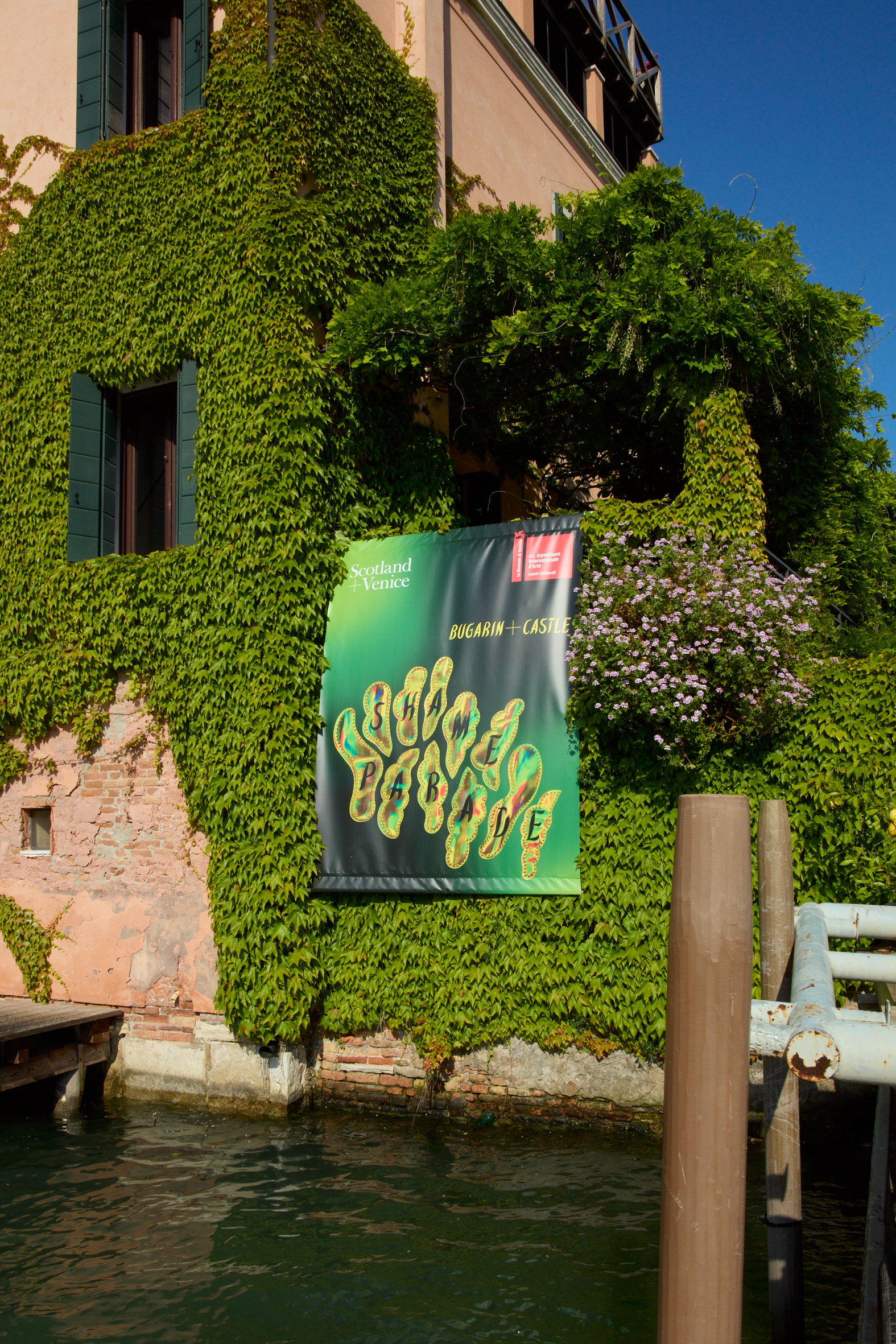
Scotland + Venice for the 61st International Art Exhibition – La Biennale di Venezia
9 May – 22 November 2026, Olivolo
Bugarin + Castle
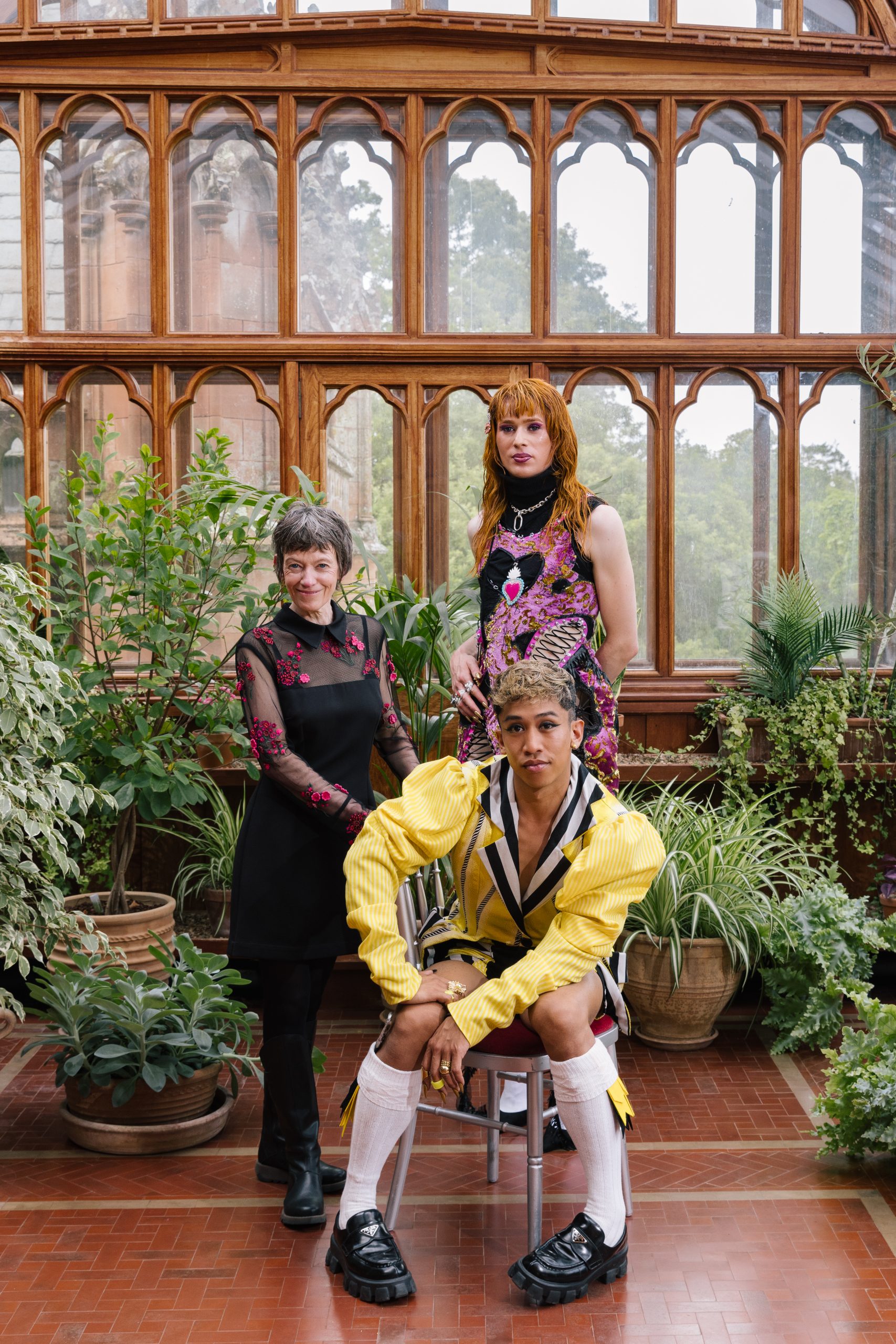
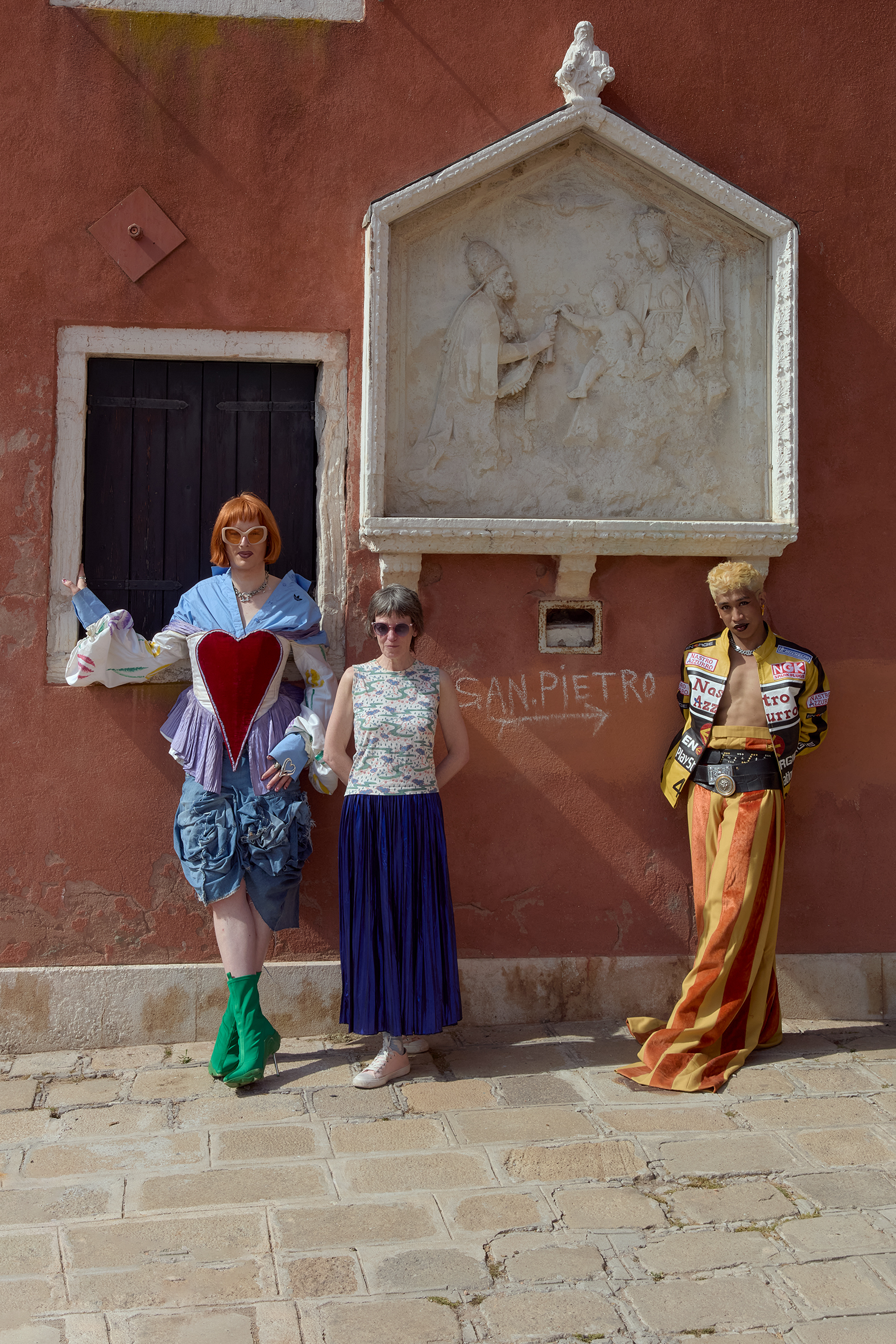
For the 61st La Biennale di Venezia, Scotland + Venice is delighted to present Shame Parade by artists Bugarin + Castle (Davide Bugarin and Angel Cohn Castle), curated by Dr Morven Gregor, Mount Stuart Trust.
Artist duo Bugarin + Castle work across architecture, moving image, sculpture and performance. Based in Glasgow, Scotland, they draw connections between queer and trans lives in Scotland and the Philippines, interrogating themes of sound, silence, voice and control.
Shame Parade grows from the history of charivari, a practice of public shaming and folk justice in medieval Europe. Focusing on individuals who defied stereotypical gender roles, neighbours gathered to mock their targets through satirical cross-dressing and discordant noise. Bugarin + Castle are interested in how charivari used cross-dressing not as a liberating form of expression but rather as a tool of control: to shame ‘unruly’ women, emasculated men and others.
The research into charivari developed from a sound mapping exercise in Manila, Philippines. In the densely populated Manila North Cemetery, distinct sound patterns emerged. By day humming with life among the tombs: voices, traffic, karaoke, while at night falling into a deep quiet. The word charivari remains uniquely embedded in sound restriction legislation in the Philippines, creating an unexpected link across time and geography. This connection, carried through sound, forms the foundation of the exhibition.
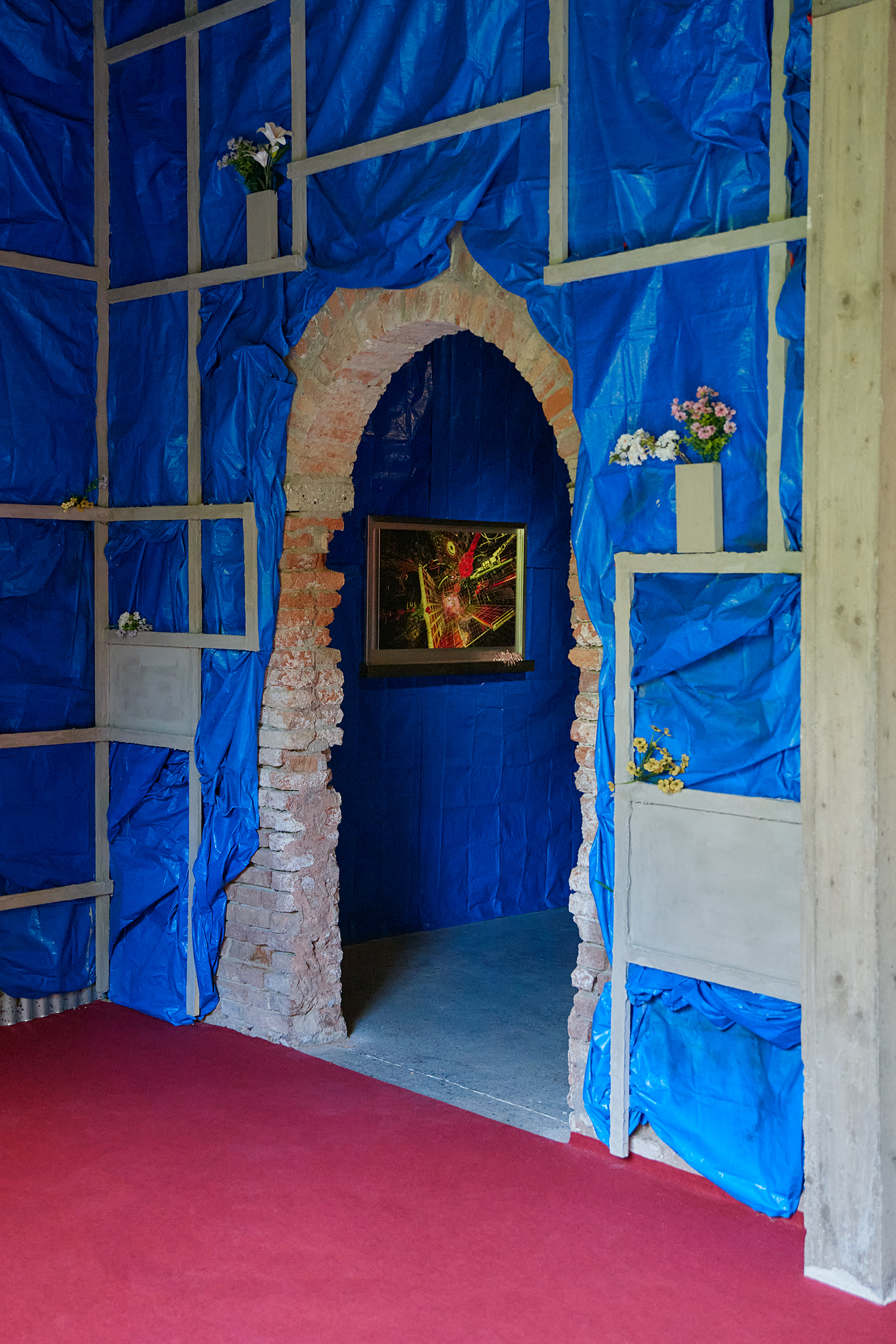
Across the installation, the artists bring together fourteenth-century court transcripts, satirical eighteenth-century engravings, contemporary karaoke ballads, medieval armour and Filipino vehicle art to construct a vivid, time-looped world overflowing with tension and pleasure. Material choices echo a central question of what is revealed or concealed by artworks and ourselves. The presented works slice through and travel across the exhibition space, encouraging multiple viewpoints.
By mapping shame and transformation across continents and time, Bugarin + Castle create a space of emotional complexity in which power and identity remain in motion.
List of works
Exterior
Soundtrack for a clock and a jeepney.
Duration: Looped
Front Space
At Certayne Tymes. Sculpture suspended within constructed environment
Capiz shell, 3D printed plastic, resin, steel, aluminum, bronze, clock mechanism, fake gems, spray paint, nail art paint.
98 x 110 x 44cm
Nocturnal Amusements
Timber, waxed wood, aluminum, steel, spray paint, printed vinyl, headlights, number plates, glass vitrine, plastic miniatures, LED lighting, paint, tissue, modelling clay, balsa wood, cardboard, plaster, nail press-ons, nail art paint, fake gems
Approx. dimensions: 300 x 280 x 400cm
Back Space
Set Upon
Five-layer print on aluminum, screen and flat-bed printing. Steel frame
Framed: 76 x 122 x 6 cm
Submit to Sound
Multi-channel moving image work
Duration: 20 minutes
More about the Artworks
At Certayne Tymes
This sculpture comprising 3D printing, Capiz shell, resin, and is reminiscent of a traditional public clock. The delicacy and luminosity of Capiz shell have made this natural material a defining feature in Filipino art and design. A clock serves to be both decorative and disciplinary, featuring mechanical, anatomical, and vocal units of measurement of time and passing. With the Scottish word ‘widdershins’ in mind – against the sun, or against time – the work suggests a disobedience against prescribed timelines or ways if living. It includes a stylised image of a human throat focusing on the depiction of an Adam’s Apple, gesturing toward the rhythms and registers of gendered voice. In one respect, the clock is a memento mori, reminding the viewer that time is passing and life is there to be embraced. More specifically, considering shame, and parade, this work suggests complexities, joy and tension within trans experiences around passing, clocking. ‘At certayne tymes’ is a quotation from Medieval Scottish poet William Dunbar’s satirical work The Tretis of the Tua Mariit Wemen and the Wedo, a voyeur’s account of women discussing the search for sexual fulfillment. The title encompasses both certainty and flux, and bridges historic and contemporary discussion of relationships, roles and gender.
Surrounding the sculpture is ‘Pride Debris’ – discarded items collected by the artists at LGBTQ Pride Parades in Scotland over Summer 2025.
Nocturnal Amusements
Inspired by hand-painted Filipino jeepney trucks, Nocturnal Amusements fuses teasing decorative painting with structural complexity. In Filipino cities jeepneys are widely used for public transport; re-purposed relics of the period of US colonisation (1898-1946), that followed Spanish colonisation (1565-1898) and British occupation (1762-64). Emblazoned across the sculpture is the question Are You Discreet? a direct and knowing provocation to the viewer. This combined, with the surrounding queer and trans figures suggests, a contrast between defiant self-confidence and playfulness, against requirements from others to be quiet or hidden, across social, sexual, or structural contexts.
Embedded in the sculpture is a diorama, which simultaneously plays with perspective and focuses the eye on the figure of a horse, cross-dressed characters and a monkey, drawn from illustrations of shaming parades by English painter and satirist William Hogarth (1697 – 1764).
Intentionally defying a single perspective, the sculpture cannot be viewed from a single room. Viewing the work from the second gallery, scale, time and place shift from European charivari to the joyful if restricted nocturnal amusements – especially karaoke – within the urban dwellings of the Manila North Cemetery.
Submit to Sound
Through shifting time periods, places and spaces, including Scottish historic locations, preparations unfold for a shaming parade, and the emergence of a new voice. Sadie, a trans woman undergoes voice feminisation therapy, as she reflects on and undertakes other forms of training; from roleplay to stunt doubling to recounting the words of C14th trans woman and sex worker Eleanor Rykener. From below a trapdoor, on ladders or gripping perilous ropes, Mr. Mimic appears, echoing Sadie’s clothing and sounds with gestures that oscillate between mockery and empathy. Two singers, from the Manila-based band Kalye Teresa, send their voices through windows and arrow slits, carrying stories of questioned desire, defiance and shaming. Amid interruptions, their music confidently reverberates from karaoke screens in the homes of queer Filipinos. Across these vignettes, sound, shame and voice become contested tools of control and transformation.
Set Upon
The vibrant colour palette of this digital print on metal visually unites research themes, objects and locations. Architecturally modelled, it includes the Horoscope ceiling at Mount Stuart and plans of storage facilities in Edinburgh and Manila, housing archives containing sound restriction laws. The vertiginous perspectives echo the use of shifting sightlines in the moving image work Submit to Sound, specifically connecting to falls and climbs through the trapdoor. By introducing ideas of entrapment, the artists highlight a discriminatory trope trans people have regularly encountered. On the stainless steel frame are Below, shaming parade participants feature on nail art: talons that can be worn, claimed or removed.
Bugarin + Castle’s work invites viewers to linger in emotional complexity. By mapping shame and transformation across continents and through time, they create a politically charged space where power and identity remain in motion.